
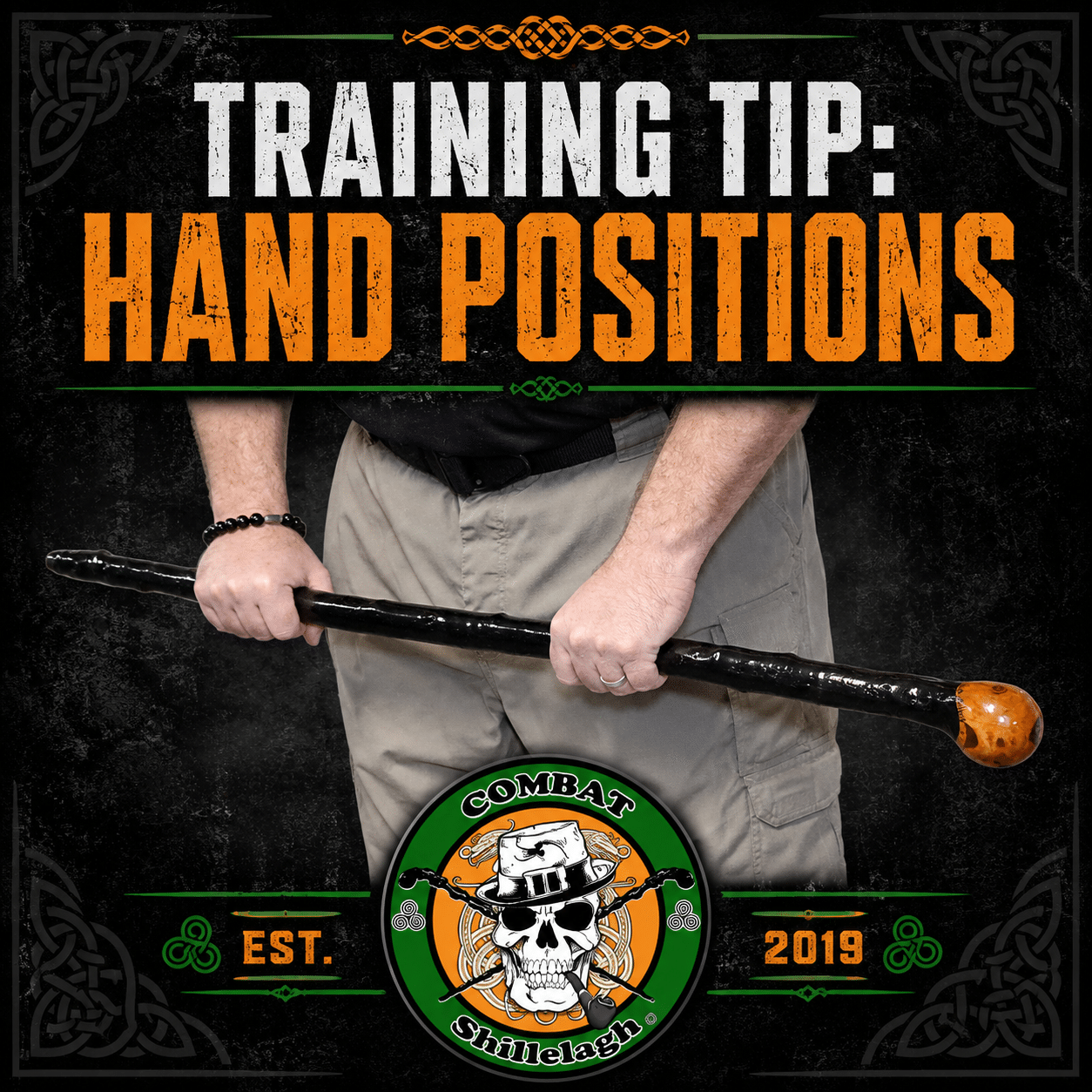
One of the clearest differences between a beginning student and a more advanced practitioner is not simply how hard they can strike or how many techniques they know. It is how well they can manipulate the bata while they move. At the beginning of training, hand placement is relatively structured. That is intentional. Students need clear reference points so they can learn proper mechanics without adding unnecessary complexity too early. As skill develops, however, the hands become increasingly dynamic. Grip position, reach, leverage, and weapon orientation all begin to change continuously as the body moves. That progression is an important part of learning how to use the bata as an adaptable weapon rather than simply holding it like a fixed object.
Start With Simple Hand Placement
At a foundational level, we teach hand position within the framework of the 9 Gates. A simple way to understand this is to mentally divide the shaft of the bata into thirds. Those sections provide basic reference points for where the hands should be placed during different strikes, blocks, and movements. Early on, this gives the student something consistent to work with. You are learning where your hands belong, how the weapon should be oriented, and how your body should move around those positions.
As you begin striking from one side and then the other, the hands also need to change. For example, as you raise the knob end of the bata into position for a strike, the front or leading hand may release while the rear hand guides the weapon. The hands then change positions as the bata transitions to the opposite side. At the same time, your feet and body position should be changing with the weapon. This is important because the stick and the body should not be treated as two separate things. Your feet move, your body shifts, your hands reposition, and the bata changes sides. All of those actions should ultimately become part of the same coordinated movement. At first, those hand changes can feel awkward. Like anything else, they become smoother through slow and deliberate repetition.
The Hands Should Never Be Static
As the student progresses, hand placement becomes less rigid. One of the core ideas in our system is that the hands are never truly static on the bata. This does not mean constantly moving your hands just for the sake of moving them. It means understanding that hand position is another tool that can be adjusted depending on what you are trying to accomplish.
One of the first advanced applications of this concept is sliding the hands along the shaft to change the effective reach of the weapon. If you keep your hands locked in exactly the same position all the time, you are voluntarily giving up much of the bata’s available length. By learning to slide and shift your hands, you can extend your striking range, shorten the weapon for closer work, or reposition your hands for better leverage and control. This allows you to use much more of the weapon. The bata is not simply the section extending past your lead hand. The entire length is available to you.
Loose Grip, Strong Impact
Another important concept is grip tension. Beginners frequently hold the bata much too tightly. That is understandable. When someone is learning to control a weapon, the natural reaction is often to squeeze it as hard as possible. Unfortunately, excessive tension usually makes movement slower, stiffer, and less adaptable.
We want the bata held loosely, but under control. A simple way to think about it is this: loose, loose, loose, then grip strongly at the moment of impact, then immediately relax again. Most of the time, the hands should remain relaxed enough to allow the weapon to move freely. The grip tightens significantly at the point of impact when structure and control are needed most. Immediately afterward, the hands relax again so the next movement can begin.
That change in tension allows you to remain nimble while still producing a solid strike. If your hands, forearms, shoulders, and upper body remain tense throughout the entire movement, you create resistance against yourself. The weapon cannot move as freely, transitions become slower, and you often end up relying on muscular force instead of coordinated body mechanics. A relaxed grip also makes it much easier to slide the hands, change positions, and manipulate the bata dynamically.
Using the Hands to Change Range
As your skill continues to develop, hand manipulation becomes closely connected to range management. Now you are not simply changing hand positions because a technique calls for it. You are using your hands to actively change the space between you and your opponent.
Imagine moving your body while simultaneously sliding your hands toward the end of the bata. Your step creates additional range, but your changing grip adds even more reach. You can also reverse that process. As distance collapses, you can slide or reposition the hands to shorten the effective length of the weapon and make it more manageable in close quarters.
That means your weapon range is not fixed. Your body movement can change distance. Your footwork can change distance. Your hand position can change distance. When all three are working together, the changes can happen very quickly. This is what we mean when we talk about using movement to create and destroy space.
The Bata and the Body Move Together
At more advanced levels, hand changes should no longer look like separate actions. You should not be thinking, “Now I move my feet. Now I slide my hand. Now I strike.” The body and the weapon should move as one coherent unit. Your footwork affects your range. Your body rotation affects your power. Your hand placement affects your reach and leverage. Your grip affects how freely the bata can move. All of these things are connected.
This is why dynamic hand manipulation becomes such an important part of advanced training. The more comfortable you become changing grip positions while moving, the more adaptable the bata becomes. You can extend range, shorten range, alter leverage, change sides, redirect the weapon, and transition from one action into another without stopping to reset.
At higher levels, this becomes increasingly subtle. A small hand movement can suddenly change how far the weapon reaches. A slight grip adjustment can change leverage. A quick slide along the shaft can turn what looked like one range into another. To an opponent, those changes may happen before they fully recognize what has occurred.
At the beginning, learn where your hands belong. Then learn how to change them. Then learn how to change them while your feet and body are moving. Eventually, the bata stops feeling like something you are merely holding. It becomes something you are actively manipulating as part of your own movement.
That progression from structured hand placement to dynamic weapon control is one of the important differences between simply knowing how to swing a stick and truly understanding how to use the full weapon.