
A self-defense encounter does not end when the physical danger stops.
That is one of the most important things to understand. You may survive the immediate threat, create distance, stop the attack, and get to safety, but now another process begins. Police may respond. Statements may be taken. Witnesses may be interviewed. Cameras may be reviewed. Reports may be written. And anything you say in that moment may follow you into a courtroom.
This is why reporting a self-defense incident requires a calm, disciplined approach.
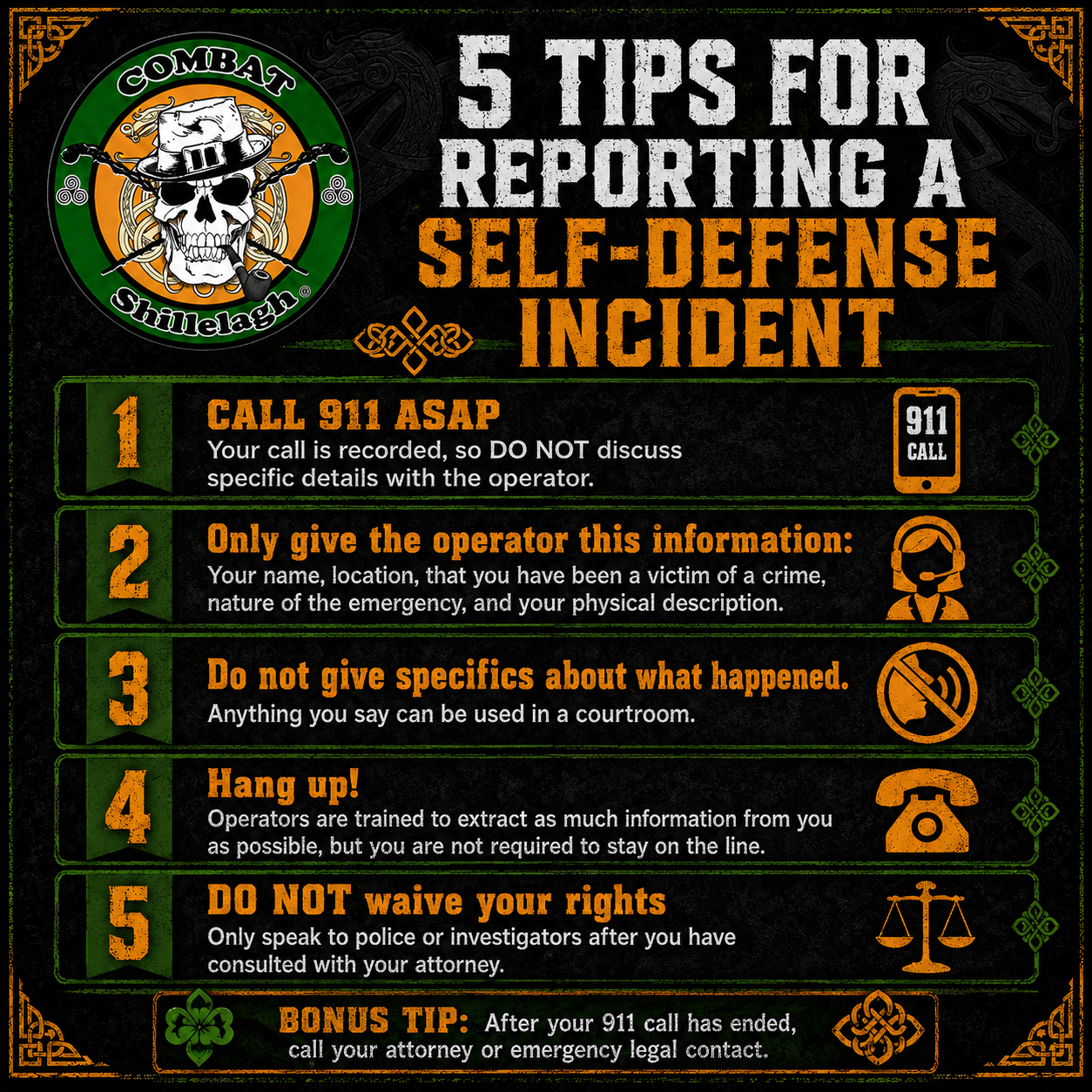
The first step is to call 911 as soon as possible once you are safe enough to do so. If you were the victim of a crime, you want the record to show that you contacted authorities. But remember that 911 calls are recorded. This is not the time to give a detailed play-by-play, argue your case, or emotionally explain everything that happened.
Your job is to report the emergency, identify yourself, identify your location, and request help.
A simple statement may be enough: “My name is ____. I am at ____. I was attacked. I need police and medical assistance.” Give your physical description so responding officers can identify you. If there is an ongoing danger, report that clearly. If someone is injured, request medical help.
But do not start offering detailed explanations about every movement, every strike, every fear, or every decision. After a violent encounter, your body and mind may be under the effects of adrenaline, shock, confusion, fear, anger, and tunnel vision. Your memory may be incomplete. Your timing may be distorted. You may unintentionally say something poorly, inaccurately, or out of order.
That does not mean you should lie. Never lie.
It means you should not try to fully litigate the incident on a recorded emergency call.
The second point is to give only the necessary information to the operator: your name, location, the nature of the emergency, that you were the victim of a crime, and your physical description. Keep it simple. Keep it factual. Ask for help.
The third point is to avoid giving specifics about what happened until you have had time to calm down, collect yourself, and speak with legal counsel. Anything you say can be used later. Even truthful statements can create problems if they are incomplete, emotionally charged, or misunderstood.
The fourth point is to end the call when the essential information has been communicated. Operators are trained to gather information, and they may continue asking questions. Follow lawful instructions related to immediate safety, but do not feel pressured to give a full statement about the incident while you are still under stress.
The fifth point is to not waive your rights. When police arrive, understand their job. They are there to secure the scene, stop the disturbance, identify involved parties, and begin the investigation. They do not automatically know who the defender is and who the aggressor is. The other person may lie. Witnesses may be confused. Everyone may claim to be the victim.
Be calm. Be respectful. Do not argue. Do not resist. Point out evidence, witnesses, injuries, and the fact that you were attacked. Then make it clear that you will cooperate after speaking with an attorney.
In Combat Shillelagh training, we study self-defense through the use of the shillelagh, but we also have to understand the aftermath of self-defense. The goal is not only to survive the violent moment. The goal is to survive everything that comes after it as well.
Call for help. Say what is necessary. Protect your rights. Get legal counsel.
Specific laws and procedures vary by jurisdiction, so this is not legal advice. It is a mindset reminder: how you handle the aftermath matters.