
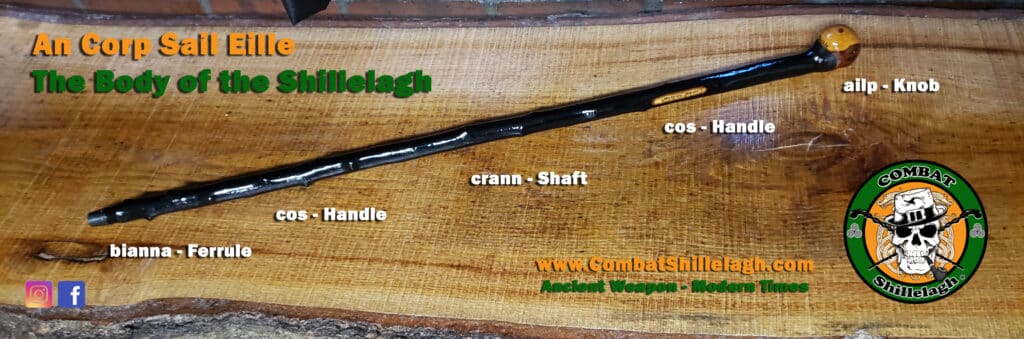
At first glance, a shillelagh and a walking stick may look similar. They’re both sticks, both handheld, and both capable of supporting you on a trail or sidewalk. But once you understand the history, craftsmanship, and purpose behind a true shillelagh, the difference becomes incredibly obvious. A walking stick is exactly that: a tool designed for balance, posture, stability, and hiking support. Its purpose is vertical load-bearing. A shillelagh, however, is historically a fighting stick first and a walking stick second. It is built from the ground up for durability, impact, and combat effectiveness. In other words, all shillelaghs can be walking sticks, but not all walking sticks can ever be shillelaghs.
Walking sticks are usually made from lightweight, easy-to-shape woods like pine, cedar, or manufactured materials such as aluminum or carbon fiber. They are ergonomic, comfortable, and often designed to be as light as possible. By contrast, a real shillelagh is almost always made from dense, heavy hardwood like blackthorn, oak, holly, hazel, or ash. Woods chosen specifically because they can withstand significant force without breaking. These woods were not selected for ease of carving or lightness; they were selected because they survive impact and remain strong under pressure. While a typical walking stick is built for bodyweight support and gentle terrain use, a shillelagh is built to redirect and deliver force safely.
The knob of a shillelagh is another giveaway. Many authentic shillelaghs retain the root ball of the tree or bush (or the intersection of a branch), creating a naturally heavy and rounded striking end. This knob is carefully shaped, hardened, and sometimes textured for grip. It serves a combative purpose, giving the practitioner a powerful close-range striking option. Walking sticks rarely include a knob because their function isn’t impact-based. Most have rounded handles, T-grips, curved cane tops, or molded ergonomic grips meant to sit in the palm comfortably, not withstand blunt-force trauma.
The crafting process further widens the gap. A traditional shillelagh undergoes a lengthy transformation: cutting during the winter, curing for months or years, heating or smoking to harden the grain, stripping or refining the bark, and sealing with oils and waxes. The stick is engineered for strength and longevity. Walking sticks, however, are usually carved or assembled with much less concern for seasoning or grain preservation. They simply don’t need to endure the same forces. A real shillelagh, properly cured and hardened, can last decades, often generations.
Purpose is the final and perhaps most important distinction. The shillelagh grew out of necessity in a time when ordinary people needed a way to defend themselves legally and practically. It became an everyday-carry tool woven deeply into Irish culture. While it absolutely functioned as a walking stick, its true identity was as a multipurpose defensive weapon, something you carried to protect yourself, your family, or your livestock. A walking stick, by contrast, has no combat identity. It’s simply for mobility.
Combat Shillelagh teaches students to recognize this difference because training demands a functional tool. Many beginners show up with a decorative souvenir stick or a flimsy hiking staff and quickly learn that these tools cannot withstand real striking drills. Understanding the difference between a shillelagh and a walking stick is part of understanding the art itself. When you hold a proper shillelagh in your hands. Balanced, dense, seasoned, and alive with history, you immediately feel the difference. It’s not “just a stick.” It’s a purpose-built companion in training, tradition, and self-defense.