One of the most persistent and culturally limiting myths about the shillelagh is the claim that women never used them. This misconception often comes from outdated ideas about gender roles, Victorian-era stereotypes, and romanticized depictions of Irish culture where men fought and women watched from the sidelines. But once you look beyond the myth and into the actual history, a much more accurate, and far more empowering, picture emerges. The truth is that women absolutely did use shillelaghs, both as everyday tools and as defensive weapons.
To understand why this myth arose, you need to look at how Irish history has been filtered through storytelling and outsider perspectives. Much of the public imagery around shillelaghs comes from caricatures: burly Irishmen fighting outside pubs, faction battles filled with men brandishing sticks, and comic songs portraying male-centered brawls. These depictions often ignored the daily experiences of Irish women, who worked the land, traveled between villages, tended livestock, managed households, and navigated the same dangerous environments as men. In rural Ireland, threats didn’t discriminate, and neither did the tools used for protection.
Women frequently carried sticks while walking, herding animals, or traveling alone. These sticks might not always have been formal shillelaghs, but many were crafted in similar ways, dense wood, cured, hardened, and practical. Women used these sticks for balance, for warding off animals, and for self-defense when necessary. Historical anecdotes describe Irish women confronting thieves, chasing off predators, or defending their homes with sticks or similar tools. These actions may not have been labeled “martial arts,” but they were very much practical applications of shillelagh-like skills.
Additionally, the idea that only men engaged in combative training ignores the realities of family-based martial traditions. When Irish Stick Fighting was passed down within families, women were part of those families. They observed, practiced, or at the very least became familiar with the movements. In some lineages, women were known to train alongside male relatives. Skills that were meant for survival were often taught broadly, not hoarded exclusively by one gender. The practical world did not allow such limitations.
The myth also collapses when you consider Ireland’s long history of strong, warrior-associated women. Irish mythology honors female warriors like Scáthach and Queen Maeve (Queen Medb). Folk stories tell of women defending their families with sticks, staffs, or tools at hand. Even if these accounts are embellished or allegorical, they reflect cultural acceptance of women wielding weapons, including sticks.
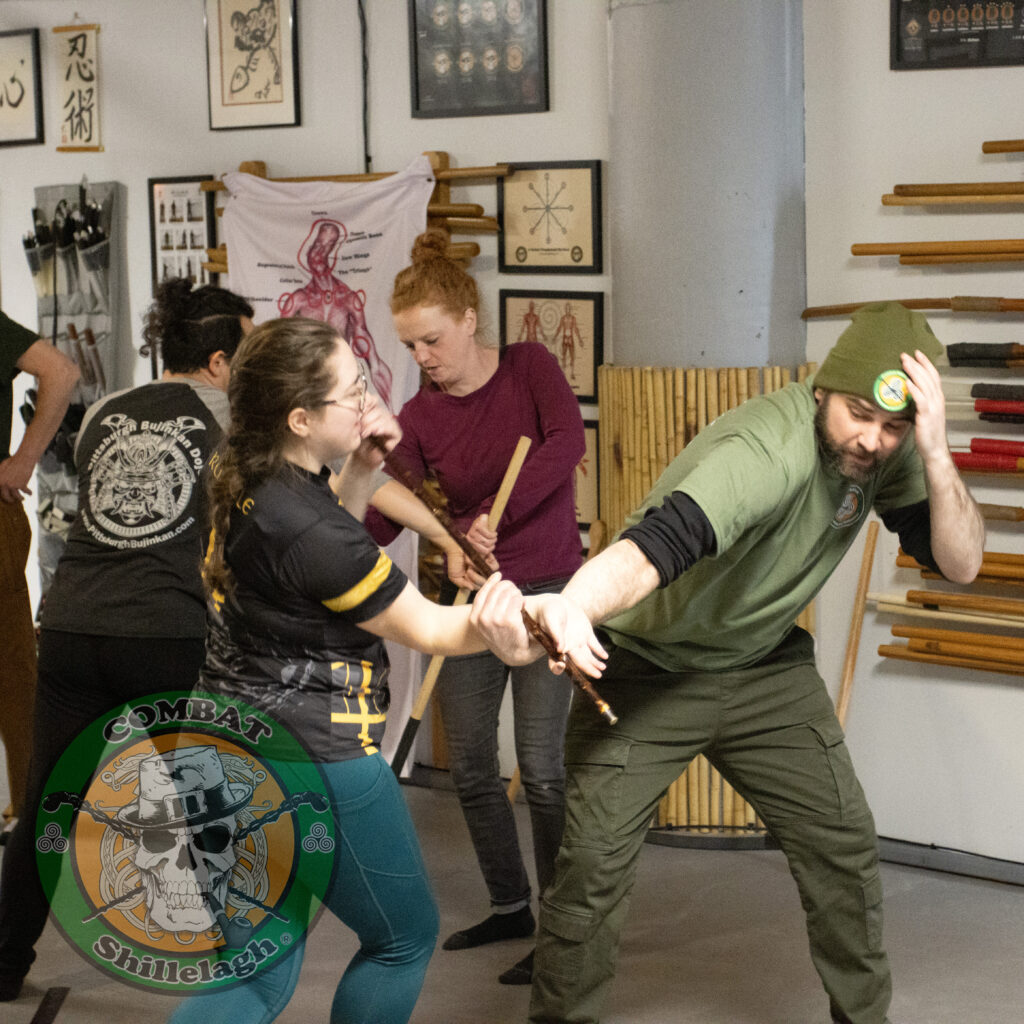
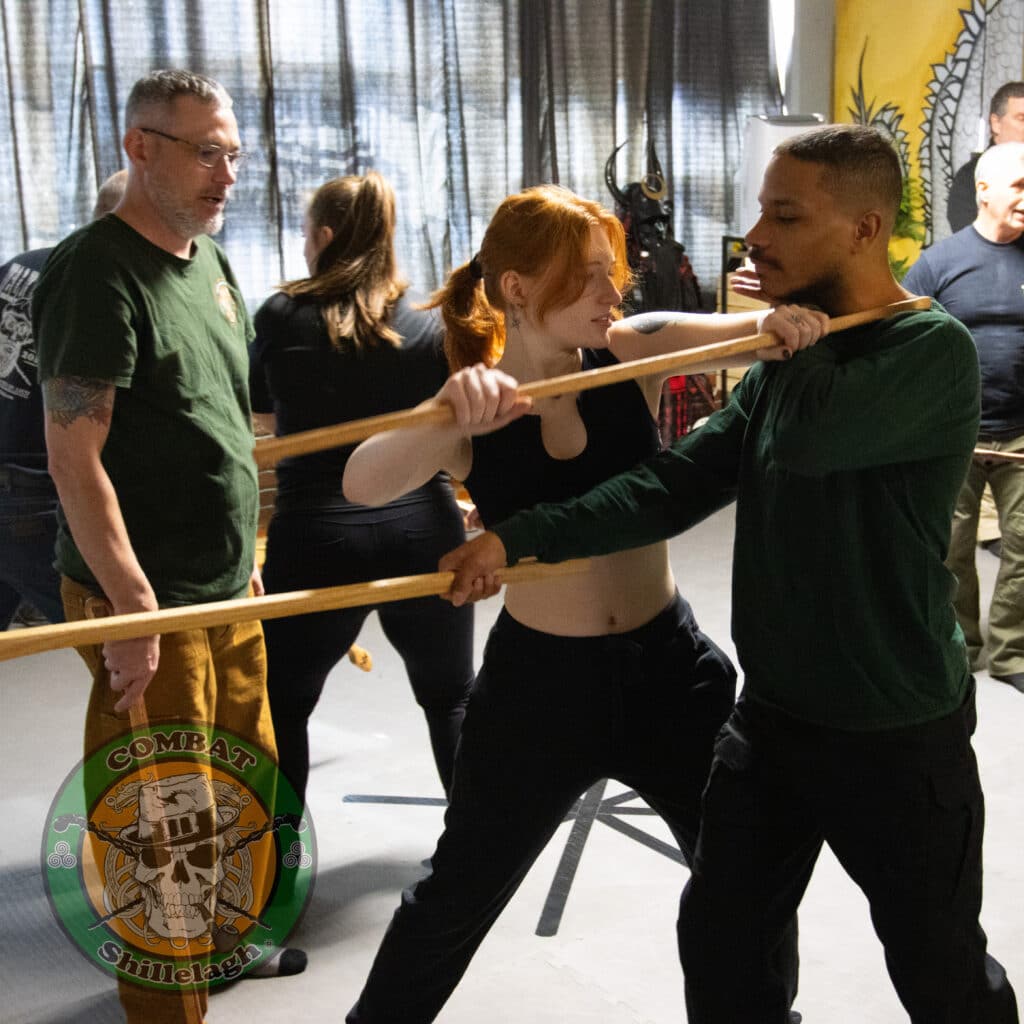
In today’s modern revival of Irish martial arts, women play a significant and growing role. In the Combat Shillelagh program, women train alongside men at every level, from beginner ranks all the way through advanced and instructor pathways. Many women excel because shillelagh fighting does not rely on brute strength. Instead, it emphasizes timing, footwork, precision, and leverage, qualities at which women tend to thrive when training with consistency. The stick amplifies technique, making it an ideal tool for practitioners of all body types.
Moreover, the shillelagh is one of the most accessible martial tools for women today. It is legal to carry in most places, socially acceptable, and easy to store at home or transport discreetly. Women who train in Combat Shillelagh often do so for self-defense, fitness, heritage, or personal empowerment. They discover quickly that the weapon doesn’t require extraordinary size or strength, just commitment and practice.
By repeating the myth that “women never used shillelaghs,” we erase the everyday experiences of countless Irish women who lived in environments where self-reliance was essential. The truth is that women have always used tools like the shillelagh when needed, whether for defense, survival, or practical tasks. Today, they continue that legacy through structured programs like Combat Shillelagh that honor history while empowering modern practitioners. So no, the shillelagh was never exclusively a man’s tool. It belonged and still belongs—to anyone who needed it. And today, women around the world are reclaiming that heritage with pride.