Add to cart
Sale!

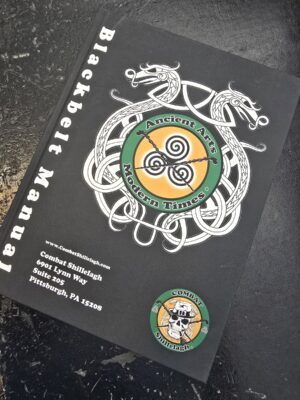
Top Training Tips for Irish Stick Fighting Book

Original price was: $69.97.Current price is: $39.97.

Add to Cart
Top Training Tips for Irish Stick Fighting Book
$69.97 Original price was: $69.97.$39.97Current price is: $39.97.

Train Smarter. Understand More. Learn How to Learn Irish Stick Fighting.

Irish Stick Fighting has deep historical roots, but the way we train and understand the art today can—and should—benefit from modern approaches to learning, skill development, biomechanics, problem-solving, and self-defense.

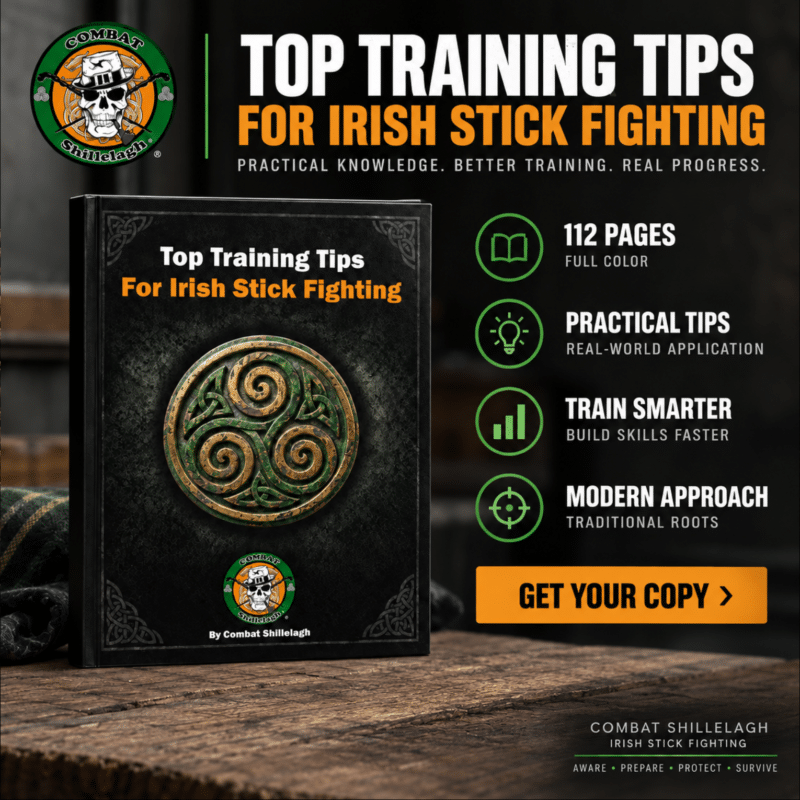
Top Training Tips for Irish Stick Fighting is a collection of practical concepts designed to help students deepen their understanding of the shillelagh and become more thoughtful, adaptable martial artists. Rather than focusing only on adding more techniques to memorize, this book explores something equally important: how to learn the art more effectively.

That distinction matters.

Many martial arts books focus on what to learn: a strike, a block, a drill, a sequence, or a technique. Those things are important, but long-term growth also depends on understanding how to train. How do you build power efficiently? How do you improve timing? How do you use footwork to control distance and angle? How do you recognize patterns? How do you move from copying techniques to understanding principles? How do you continue progressing after the initial excitement of learning something new wears off?

Those are the questions at the heart of this book.

The concepts collected here represent a modern-day approach to training Irish Stick Fighting. They are intended to help bridge traditional martial practice with contemporary understanding of movement, repetition, timing, biomechanics, tactical awareness, mindset, and skill acquisition. The goal is not to change the character of Irish Stick Fighting, but to give today’s student better tools for understanding and developing it.

Inside, you will explore concepts such as power generation, body alignment, distance management, footwork, timing, broken rhythm, combination striking, striking angles, leverage, weapon manipulation, and the unique properties of the traditional Irish blackthorn shillelagh. You will also examine broader ideas such as commitment, incremental improvement, Shu-Ha-Ri, beginner’s mindset, historical context, and the importance of understanding real-world violence.

Together, these subjects help answer a larger question:

How do you become better at learning the art?

A student who understands how to learn does more than repeat movements. They begin to recognize why those movements work. They start seeing relationships between footwork and power, between timing and distance, between structure and leverage, and between individual techniques and the larger principles that connect them.

This is where training begins to change.

Instead of simply memorizing a response to a particular attack, you begin to understand the principles that allow you to adapt when the attack changes. Instead of focusing only on how hard you can swing the bata, you learn how the feet, hips, spine, shoulders, and hands work together to generate efficient power. Instead of treating the Nine Gates as fixed lines, you begin to see the countless angles that exist between them. Instead of seeing a shillelagh as just a striking tool, you begin to understand how its shape, balance, shaft, head, and ferrule create opportunities for hooking, trapping, leverage, and manipulation.

The difference is subtle but important.

You stop asking only, “What technique comes next?”

You begin asking, “What principle am I learning here, and where else can I apply it?”

That is a much more powerful way to study a martial art.

This book is also about becoming a more independent student. Instructors can provide information, corrections, drills, and guidance, but ultimately you are responsible for turning that information into skill. That requires curiosity, consistency, reflection, and the willingness to keep returning to the fundamentals with new eyes.

A basic strike may seem simple the first time you learn it. Years later, you may see how foot placement changes its power, how rhythm changes its timing, how angle changes its purpose, and how the same body mechanics appear in an entirely different technique.

The movement did not necessarily change.

Your understanding did.

That is one of the central ideas behind Top Training Tips for Irish Stick Fighting.

This is not simply a collection of things to practice. It is a collection of ideas intended to help you practice better.

Whether you are beginning your study of the Irish shillelagh or have years of martial arts experience, these chapters are designed to help you develop a deeper relationship with your training. Read a concept, take it onto the training floor, experiment with it, and then return to it later. As your experience grows, many of these ideas will reveal new layers.

Irish Stick Fighting has a rich past, but it is also a living martial art. Modern students have access to knowledge about biomechanics, learning theory, violence dynamics, training methodology, and human performance that previous generations could never easily access.

The challenge is to use that knowledge without losing sight of the tradition.

Top Training Tips for Irish Stick Fighting is about doing exactly that: respecting the historical art while using modern training concepts to understand it more deeply.

Because sometimes the most important lesson is not another technique.

Sometimes the most important lesson is learning how to learn.

Top Training Tips for Irish Stick Fighting Book
$69.97 Original price was: $69.97.$39.97Current price is: $39.97.

Irish Stick Fighting has deep historical roots, but modern students can benefit from current knowledge about movement, biomechanics, skill development, self-defense, and the realities of violence. Top Training Tips for Irish Stick Fighting brings these ideas together in a practical guide designed to help students understand not only what to learn, but how to learn it more effectively.

At Combat Shillelagh, we bring a modern-day combatives approach to the study of the shillelagh and Irish Stick Fighting. That means respecting the history, traditions, and unique characteristics of the art while applying modern training methods and a principle-based approach to movement, timing, distance, power, strategy, and real-world self-defense. The goal is not to replace the traditional art, but to give today’s student better tools for understanding it, training it, and continuing to develop it as a living martial art.

Many martial arts books focus on techniques such as strikes, blocks, counters, drills, and sequences. Those skills matter, but collecting more techniques does not automatically create a better martial artist. Long-term growth comes from understanding the principles underneath those techniques and seeing how they connect.

This book explores power generation, body mechanics, footwork, distance management, timing, striking angles, combination striking, broken rhythm, leverage, weapon manipulation, commitment, incremental improvement, beginner’s mindset, Shu-Ha-Ri, martial arts history, and real-world violence. It also examines the unique properties of the traditional Irish blackthorn shillelagh and how its shape, balance, head, shaft, and ferrule influence how the weapon can be used.

Each chapter is designed to help you think more deeply about your training. Instead of only asking, “What technique comes next?” you begin asking better questions. Why does this movement work? How does footwork affect power? How does distance change your options? What happens when timing changes? What is the real lesson behind the drill?

A student who understands how to learn begins to see relationships instead of isolated techniques. Footwork connects to distance. Distance connects to timing. Timing connects to opportunity. Body alignment connects to power. The Nine Gates become more than fixed striking lines as you begin to recognize the countless angles between them. The shillelagh becomes more than a striking weapon as you explore hooking, trapping, sweeping, leverage, and manipulation.

Progress is not always about learning something new. Sometimes it means returning to something familiar with greater experience and seeing it differently. A basic strike may seem simple at first, but over time you may discover how small changes in grip, foot placement, body rotation, distance, or timing completely change the movement.

The technique did not necessarily change. Your understanding did.

That idea runs throughout this book. The goal is not simply to give you more things to practice. It is to help you practice better.

Whether you are beginning your journey with the Irish shillelagh or already have years of martial arts experience, Top Training Tips for Irish Stick Fighting is designed to be a companion to your physical training. Read a concept, take it onto the training floor, experiment with it, and return to it again as your experience grows.

Irish Stick Fighting has a rich past, but it does not need to remain frozen in the past. It can honor its history while benefiting from modern knowledge and training methods. That is the purpose of this book and the approach behind Combat Shillelagh: respect the tradition, understand the principles, train smarter, and keep growing.

Sometimes the most important lesson is not learning another technique. Sometimes the most important lesson is learning how to learn.