This myth might be the most damaging, and the most culturally insulting, of all the misconceptions surrounding the shillelagh. Thanks to pop culture, cartoons, and old stereotypes about Irish drinking habits, many people believe shillelagh fighting was nothing more than chaotic drunken brawling. The image is practically cliché: two wobbling men outside a pub swinging wildly at each other while half the town cheers. But this stereotype doesn’t reflect the truth. In reality, shillelagh fighting was a formalized, highly technical martial tradition with deep cultural roots and a sophisticated combative structure.
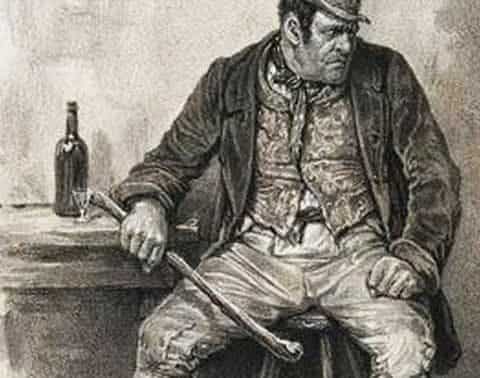
To understand the origins of the myth, you have to look at how Irish culture was portrayed by outsiders. During the 19th and early 20th centuries, political cartoons and literature often caricatured the Irish as violent drunkards, reducing their cultural practices to exaggerated stereotypes. English publications frequently depicted Irish men as primitive, drunk, and savage, using shillelaghs in comical or barbaric ways. These depictions weren’t just inaccurate, they were intentional tools of cultural mockery, designed to undermine Irish identity during a time of social and political tension.
But historical reality tells a very different story. Shillelagh fighting was part of organized combat traditions long before pub culture shaped popular imagination. Many fights occurred during faction fighting, a structured form of group combat involving rules, alliances, rivalries, and community participation. These events weren’t fueled by alcohol, they were influenced by social dynamics, political tensions, and local clan identities. While drinking may have played a role in some encounters (as it does in virtually every culture’s historical conflict), it was not the defining feature of the art.
Technique, not intoxication, was the cornerstone of Irish Stick Fighting. Historical sources describe precise footwork, strategic guard positions, angled strikes, deceptive feints, and techniques used to control an opponent’s stick or the opponent themselves. These skills required clarity of mind, physical coordination, and trained reflexes, not the stumbling chaos associated with drunken brawls. A fighter who was intoxicated would have been at a serious disadvantage against a sober, trained opponent.
Even today, practitioners quickly learn that using a shillelagh effectively demands stability, timing, and mental focus. In the Combat Shillelagh training system, students practice drills that require situational awareness, coordinated movement, and technical refinement. These are not the kind of skills you can develop while impaired, nor are they the kind you can execute in a foggy or unbalanced state. Martial arts, whether Irish, Asian, or European, rely on discipline, not recklessness.
The myth also ignores the social role of the shillelagh as a tool for safety. For many Irish people, especially travelers, farmers, and laborers, the shillelagh was a means of self-defense on long journeys, where bandits or aggressors might pose real threats. It was a companion, not a party prop. Reducing its use to drunken fights minimizes the reality of everyday survival in rural Ireland.
Modern practitioners have helped restore the shillelagh’s reputation as a legitimate martial weapon. Combat Shillelagh, for example, offers structured curriculum, progressive skill development, and rank advancement. Students learn striking mechanics, defensive strategies, footwork, close-range techniques, and real-world self-defense principles that have nothing to do with alcohol and everything to do with discipline, focus, and heritage.
So, while alcohol undoubtedly existed in Irish culture, as it does worldwide, the idea that shillelagh fighting was “always drunken brawling” is simply a stereotype rooted in prejudice and misunderstanding. The reality is richer, deeper, and far more technical. Irish Stick Fighting with the Shillelagh is a martial tradition worthy of respect. Reclaiming that legacy in the modern world, with modern understanding of self defense and martial mechanics is part of what systems like Combat Shillelagh work to achieve.