For many years, people assumed that Irish stick fighting was a completely lost martial art, preserved only in fragments of folklore or old illustrations. This myth became widespread because Irish Stick Fighting was not traditionally taught in formal schools the way Asian martial arts eventually were. Instead, it was passed down informally within families or small communities, often in secret. Combined with the decline of faction fighting and the modernization of Irish society, the art became less visible. But less visible does not mean lost, and the idea that Irish stick fighting disappeared entirely is simply untrue.
Historically, Irish Stick Fighting survived because families continued to pass it down privately. These family-based lineages meant that a father, uncle, or elder might teach a younger generation the grips, guards, and techniques used in their region. This wasn’t done through schools, belts, or formalization. It was woven into the culture of rural Irish life. But when immigration, modernization, and changing cultural values spread people across the world, much of this teaching went underground. Outsiders assumed the art was dead because they simply couldn’t see it.
Fast forward to the 20th and 21st centuries, and a remarkable thing happened: the art resurfaced. Researchers, martial artists, and descendants of old Irish families began comparing notes. Traditional shillelagh crafting revived. Historical manuscripts, illustrations, and oral histories were analyzed. Communities began sharing what they knew. Slowly but steadily, Irish Stick Fighting began reemerging. Not as a reconstruction, but as a revival rooted in genuine knowledge.
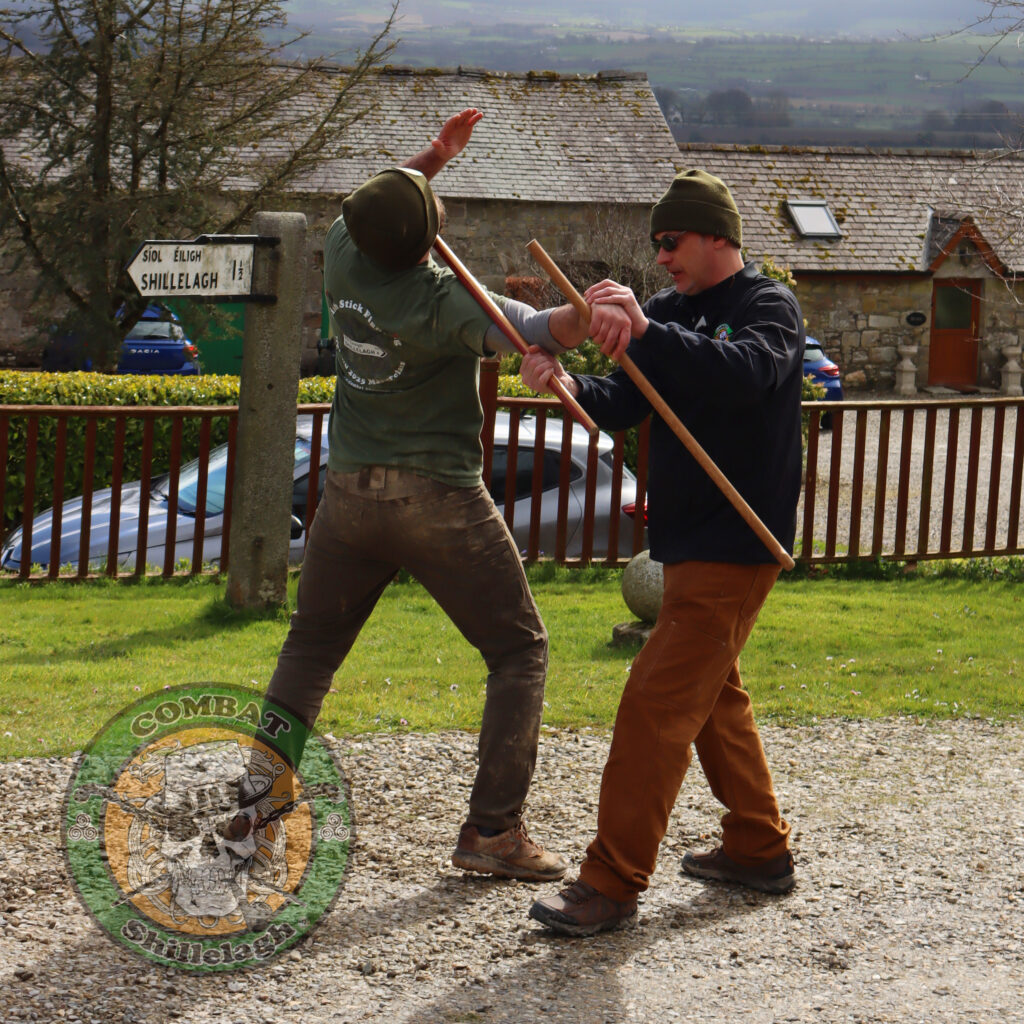
Today, Irish stick fighting is alive and thriving in several forms. Multiple groups preserve different interpretations of the art, each rooted in real historical context. Combat Shillelagh is one of the modern-day systems carrying this revival forward, blending traditional methods with modern combatives training structures so anyone, anywhere, can learn the art without requiring an in-person teacher. Rather than being a lost relic, Irish Stick Fighting has become a living, evolving martial practice accessible worldwide.
The idea that Irish stick fighting is lost often arises because people imagine martial arts as rigid systems with formal rankings, uniforms, and standardized techniques. Irish Stick Fighting was never that. It was fluid, adaptive, and localized. One family might emphasize long-end-forward grips, while another used short-end-forward. One region might prioritize binding, while another emphasized footwork and deflection. The lack of uniformity sometimes confuses people into thinking the art lacked structure. In reality, it had as much structure as it needed. Just not in the way modern martial arts audiences expect.
Combat Shillelagh plays a crucial role in making the art accessible. By offering a clear curriculum, video lessons, and a ranking pathway, the system gives structure to something that historically never had a standardized format. This doesn’t replace traditional lineages. It makes them reachable. Students all over the world who would never otherwise encounter Irish Stick Fighting now train from anywhere in the world they might be, learning and applying a real martial discipline rather than a historical footnote.
This myth persists because many people simply haven’t been exposed to the communities and systems that keep the art alive. But the truth is the exact opposite of the myth: Irish stick fighting is experiencing a Renaissance. Practitioners, craftsmen, martial artists, and cultural enthusiasts are rebuilding and expanding what was once thought nearly forgotten. Far from being lost, Irish Stick Fighting is alive, active, and growing. And Combat Shillelagh is one of the modern engines driving that revival.