
Always check local ordinances, and consult with legal counsel who is familiar with local laws. Our observations are not legal advice.
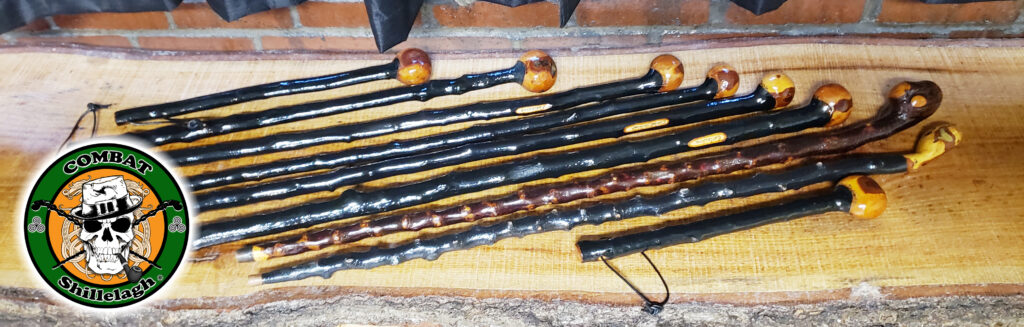
The legality of carrying a shillelagh is a question that comes up constantly, and the honest answer is that it depends heavily on where you live, how you carry it, and most importantly, what your intent is. In most places, a shillelagh is perfectly legal to own and carry because, on paper, it’s essentially a walking stick. People carry walking sticks, hiking staffs, and mobility aids every day without issue, and the shillelagh fits naturally into that category. It isn’t a knife, it isn’t a firearm, and it isn’t a concealed weapon in the traditional sense. It’s a stick. That means in everyday public settings like streets, stores, parks, festivals, and events, nobody will likely question you for carrying one, especially if it’s supporting your movement or simply dangling from your hand the way a cane would.
Where things get more complicated is with the concept of intent. Many self-defense laws around the world hinge not on what you’re carrying, but why you’re carrying it and how you behave while doing so. If you’re walking through a city with a shillelagh and simply using it as a cane or cultural accessory, you are well within legal norms. But if you’re brandishing it, swinging it around aggressively, or openly stating that you’re carrying it to harm someone, then the same stick might suddenly become classified as a weapon. In legal terms, that’s the difference between a “walking cane” and a “bludgeon.” Same object. Different intent. This is why Combat Shillelagh always teaches students responsible carry principles, situational awareness, and respect for both the tool and the laws surrounding it.
There are also certain specific environments where restrictions tend to be stricter, such as courthouses, schools, airports, and some government buildings. In those settings, security personnel may treat any rigid object, including a shillelagh, as a potential weapon regardless of cultural context. If you need a cane for mobility, you can sometimes bring it through with documentation, but if your shillelagh is clearly crafted for combat with a heavy knob, reinforced shaft, or martial aesthetic, then security may take a different view. As always, when in doubt, check local regulations or call ahead.
Transportation systems also vary. On buses and trains, a shillelagh is usually fine as long as you carry it calmly and treat it as a walking implement. On airplanes, however, anything that could be used as a bludgeoning weapon is typically banned in carry-on luggage. You may be allowed to pack it in checked baggage, but again, rules vary between countries and airlines.
One of the guiding principles we teach in Combat Shillelagh is that a shillelagh is first and foremost a walking stick until used otherwise. If you treat it respectfully, carry it appropriately, and avoid drawing unnecessary attention to it, you will almost never encounter legal trouble. Thousands of people around the world carry shillelaghs to festivals, cultural gatherings, parades, and historical events without incident. The key is not the stick, it’s your conduct and how you act.
So yes, in most places it is legal to carry a shillelagh, especially if you’re using it as a cane or cultural item. Just remember that different locations have different rules, and intent matters more than anything else. Responsible ownership and behavior go hand-in-hand with training in a system like Combat Shillelagh. Knowing when and how to carry your shillelagh is just as important as knowing how to swing it.